


Daniel García García

Fisheries science · Fish ecology · Quantitative methods

I work on fisheries science, fish ecology, movement ecology and quantitative tools for marine research.

Fisheries Movement ecology Scientific tools

Research & Projects

Small-scale fisheries

Research on assessment and exploitation in Galician small-scale, multi-gear fisheries, using long-term fishery-dependent data to examine stock status, gear selectivity and species vulnerability.

Length-based stock assessment Multi-species assessment of 12 demersal stocks using two decades of observer data and complementary length-based models. Published

Paper

Length-based stock assessment in small-scale multi-gear fisheries: insights from a European hotspot (NW Spain)

Daniel García-García, Marta Cousido-Rocha, Rafael Bañón, José Manuel Campelos, Fernando Quintero, Asunción Gancedo, Fabio Lamas, Alberto Otero, Ángel Rodríguez, Alexandre Alonso-Fernández.

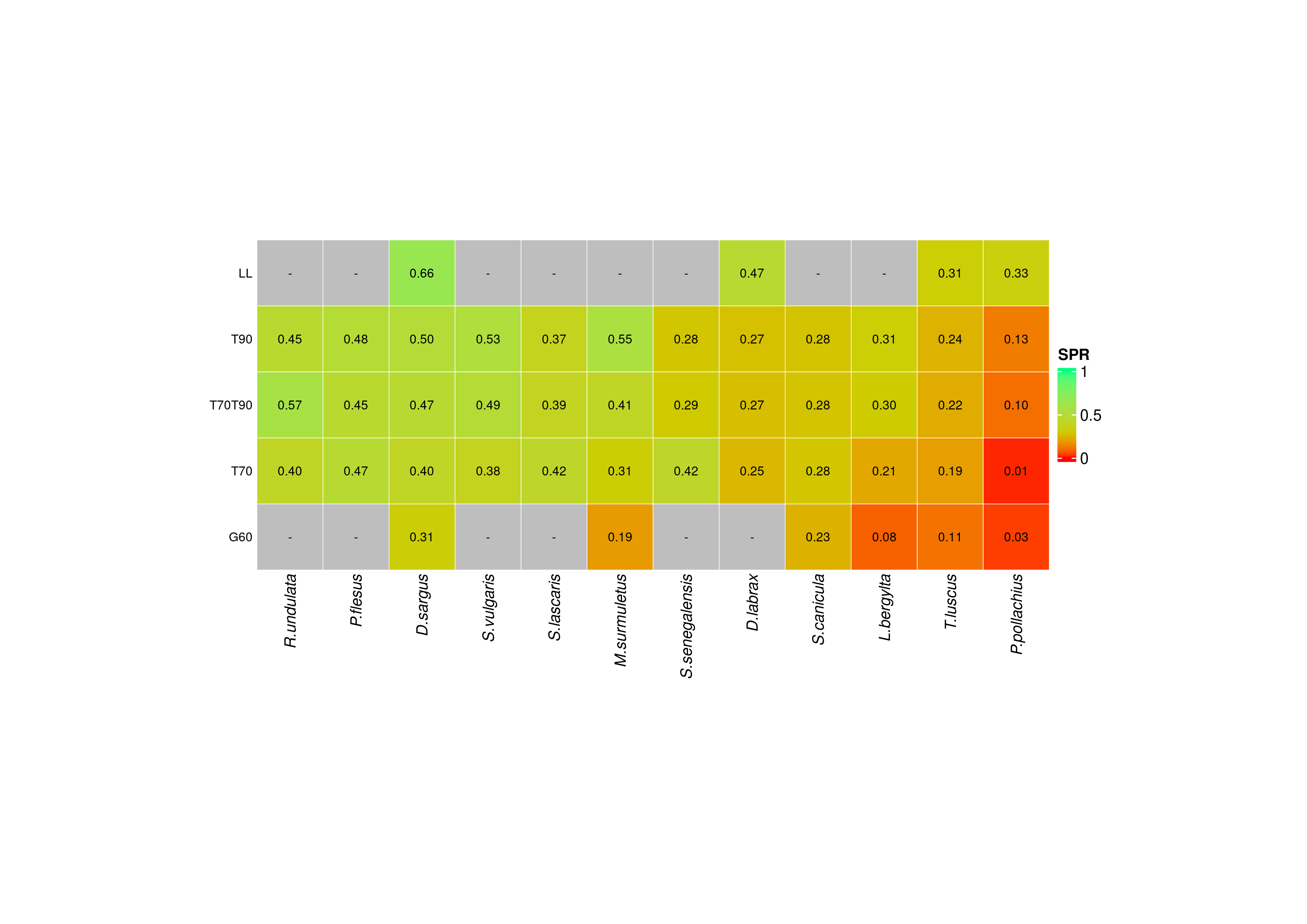
A broad assessment of stock status in the Galician small-scale fleet using LB-SPR and LIME, examining spawning potential, gear selectivity and interactions between exploitation patterns and species life-history characteristics.

Elasmobranch exploitation Long-term exploitation patterns of sharks, skates and rays in the Galician small-scale fleet. In review

Paper

Exploitation patterns of elasmobranchs in a highly developed small-scale fishery in southwestern Europe over two decades: Implications for assessment and management

Alina Hillinger, Jaime Otero, Daniel García, Rafael Bañón, José Manuel Campelos, Alexandre Alonso-Fernández.

Analysis of landings, gear-specific catches, size and depth patterns, and long-term catch dynamics to understand how Galician small-scale fisheries exploit coastal elasmobranch assemblages and how life-history traits shape vulnerability.

European seabass movement ecology

Two independent acoustic-telemetry projects examining European seabass movement and spatial ecology in Galicia and along the north-western Mediterranean coast of Spain and France.

Movement ecology — Galicia Acoustic telemetry study of juvenile European seabass movement and residency in the Ría de Vigo, with particular focus on use of the inner inlet. Paused

Preliminary results indicate that the inner Ría de Vigo is a high-use habitat for juveniles, which showed very strong residency and site fidelity there. Movements beyond the inner inlet were rare and seasonally concentrated, and most observed juvenile movement was driven by only a few excursive individuals, suggesting marked individual variation in spatial behaviour.

Movement ecology — Mediterranean Movement, habitat use and connectivity of European seabass across a network of marine protected areas in the north-western Mediterranean. Completed

Master's thesis

Movement ecology and connectivity of sea bass (Dicentrarchus labrax) in a network of marine reserves: Implications for its conservation and sustainable fishing

Daniel García-García. MSc Oceanography and Marine Environmental Management, Universitat de Barcelona, 2022.

Acoustic telemetry and network analysis of 35 European seabass tracked for 20 months across ~84 km of coastline and 97 receiver stations. The study showed extensive connectivity among protected areas, with the longest movements concentrated in winter and stronger local residency during spring and summer. Estuarine areas attracted more individuals during the winter spawning period, while movements frequently extended beyond individual reserve boundaries, highlighting the importance of connectivity among habitats and protected areas.

LIME model development

Development of the LIME population model to extend its analytical outputs and flexibility for data-limited stock assessment.

Unfished-state outputs Extension of the TMB/C++ core to expose unfished and selectivity-adjusted unfished population outputs. Completed

The model core was modified to return the unfished population and the corresponding unfished selected population under the estimated selectivity. This extension was developed and used as part of the Galician small-scale fisheries assessment.

Size–fecundity relationship Refactoring the model so the size–fecundity relationship can be supplied as an input rather than remaining fixed within the model structure. Ongoing

The current development aims to make reproductive scaling configurable, allowing LIME to accommodate alternative size–fecundity relationships rather than imposing a single relationship through the model core.

Ongoing

Other tools and collaborations

Selected analytical tools and ongoing collaborative work.

Scientific Software & Tools

chartlbi

R package modernising the ICES Length-Based Indicator workflow with ggplot2 visualisation, lighter dependencies and corrections to issues in the original algorithm.

GitHub / details

LHTpicker

R package wrapping FishLife to simplify retrieval and updating of predicted fish life-history traits, including batch processing across multiple taxa.

GitHub / details

lbmstoolbox

R package providing a unified interface to LB-SPR and LIME, with streamlined model outputs, population and catch length structures, and confidence intervals for key assessment metrics.

GitHub / details

httpeasyrest

Lightweight R wrapper around httr2 for simple REST API access, with reusable GET, POST and DELETE operations, JSON/data-frame handling and consistent response/error structures.

GitHub / details

temploapiclient

R client for accessing the TEMPLO live acoustic-telemetry API, providing programmatic access to fish detections and associated oceanographic and tag-derived measurements.

GitHub / details

Copernicus Covariate Reader

Python workflow for matching spatial observations to Copernicus Marine grid cells and retrieving only the environmental covariates needed for downstream ecological modelling.

GitHub / details

Field Work

Fieldwork & tagging campaigns

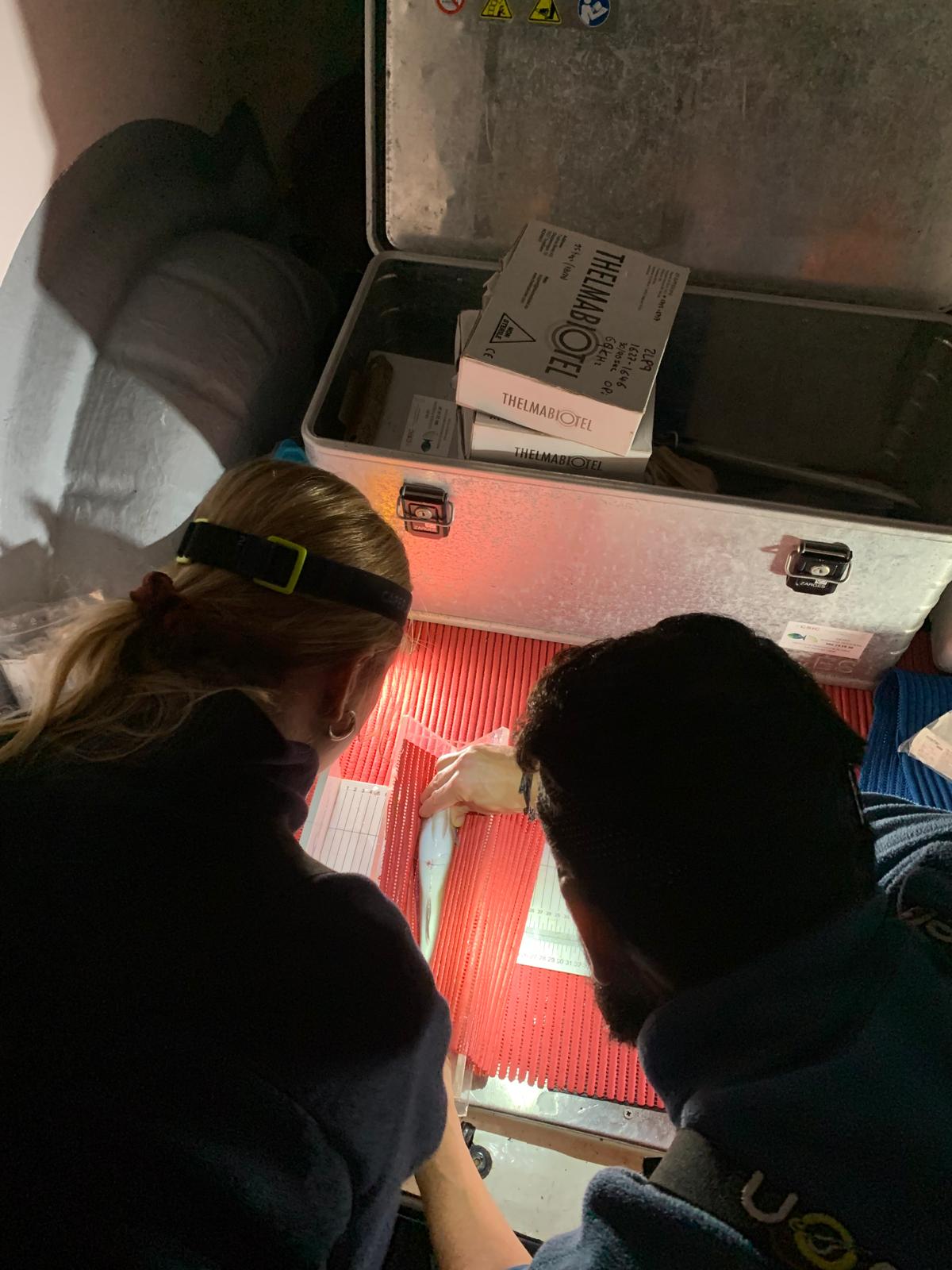
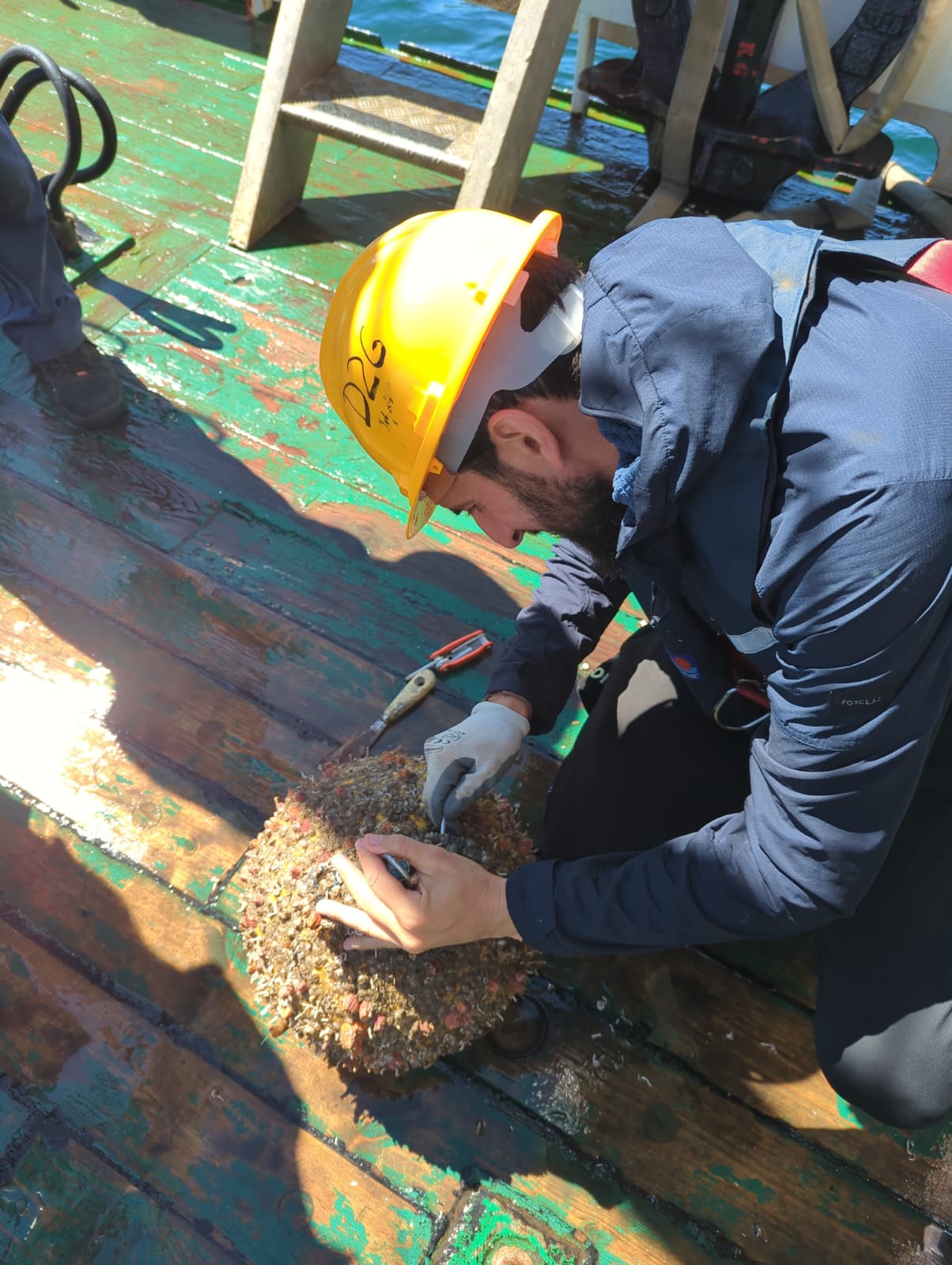
Participated in coastal elasmobranch tagging from small vessels, including acoustic tagging and collection of genetic and isotopic samples, as well as European seabass tagging from shore using rod-and-line techniques.

European seabass acoustic tagging procedure.
European seabass acoustic tagging

Acoustic telemetry deployment & maintenance

Supported deployment and maintenance of acoustic receiver networks, including data retrieval, battery replacement and redeployment using acoustic releases, and participated in Spain’s first coastal real-time acoustic telemetry network deployment.

Acoustic receiver maintenance on a vessel.
Acoustic receiver maintenance

Selected Outputs

Scientific manuscript

Length-based stock assessment in small-scale multi-gear fisheries: insights from a European hotspot (NW Spain)

Daniel García-García, Marta Cousido-Rocha, Rafael Bañón, José Manuel Campelos, Fernando Quintero, Asunción Gancedo, Fabio Lamas, Alberto Otero, Ángel Rodríguez, Alexandre Alonso-Fernández.

Spawning-potential ratio results by species and fishing gear.
Scientific manuscript

Exploitation patterns of elasmobranchs in a highly developed small-scale fishery in southwestern Europe over two decades: Implications for assessment and management

Alina Hillinger, Jaime Otero, Daniel García, Rafael Bañón, José Manuel Campelos, Alexandre Alonso-Fernández.

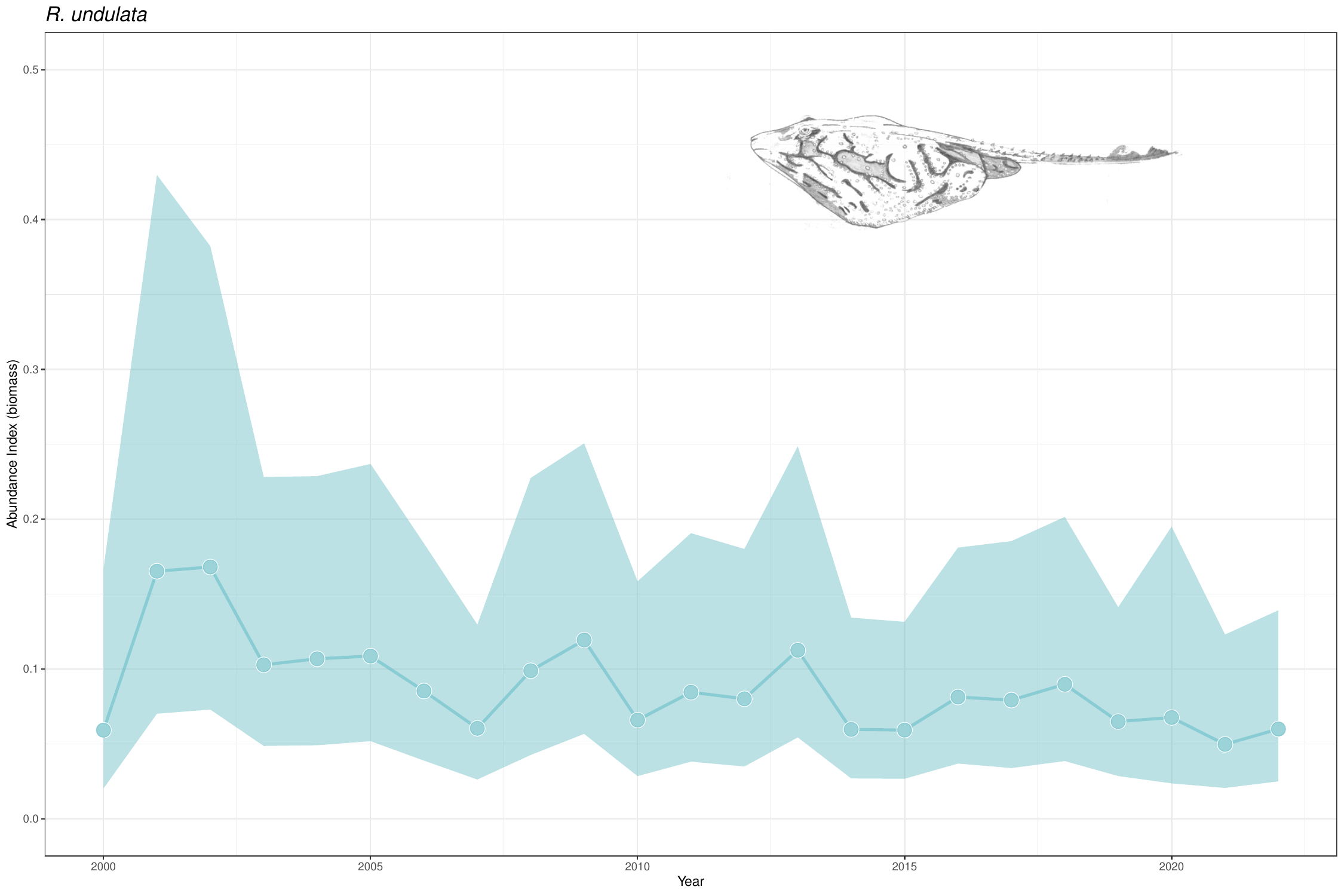
Abundance trend for the undulate ray, Raja undulata.
Workshop

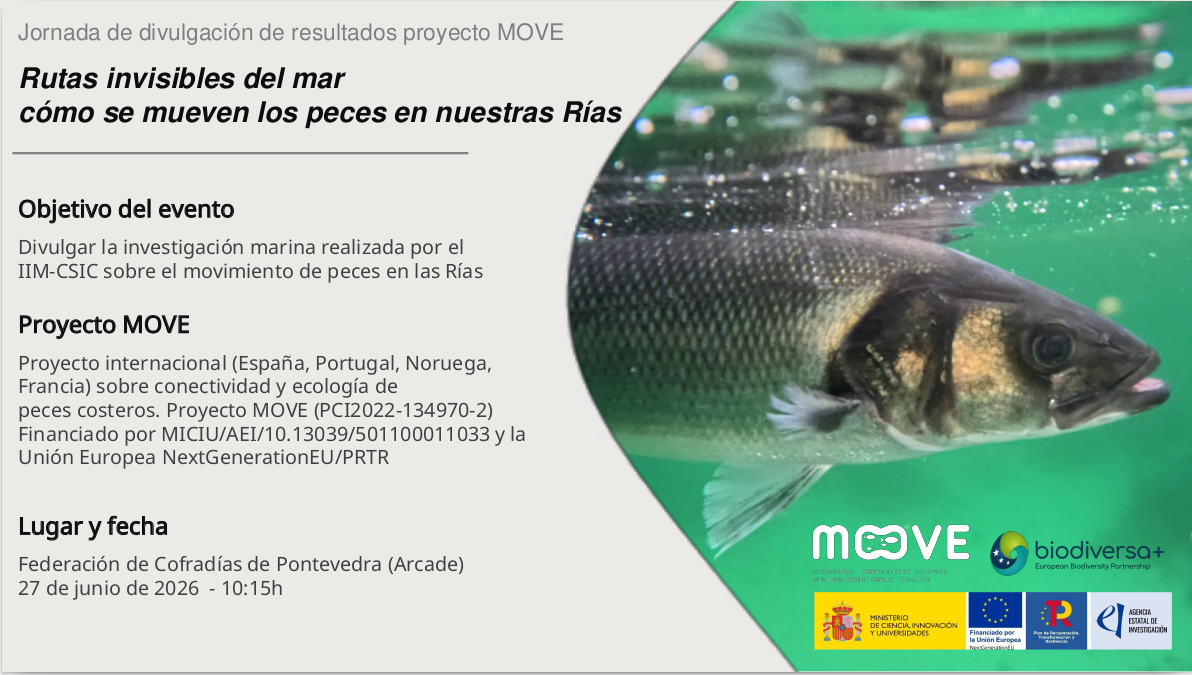
Rutas invisibles del mar: cómo se mueven los peces en nuestras Rías

Workshop coordinated by Alexandre Alonso-Fernández · IIM-CSIC / MOVE

Contribution

La lubina en movimiento: secretos de sus rutas en la Ría de Vigo

Daniel García-García · IIM-CSIC

Scientific outreach on European seabass movement in the Ría de Vigo, using acoustic telemetry results to illustrate the value of fishers' knowledge and promote continued two-way engagement between researchers and the fishing community.

European seabass used in the MOVE project workshop announcement.
↑